
About the project
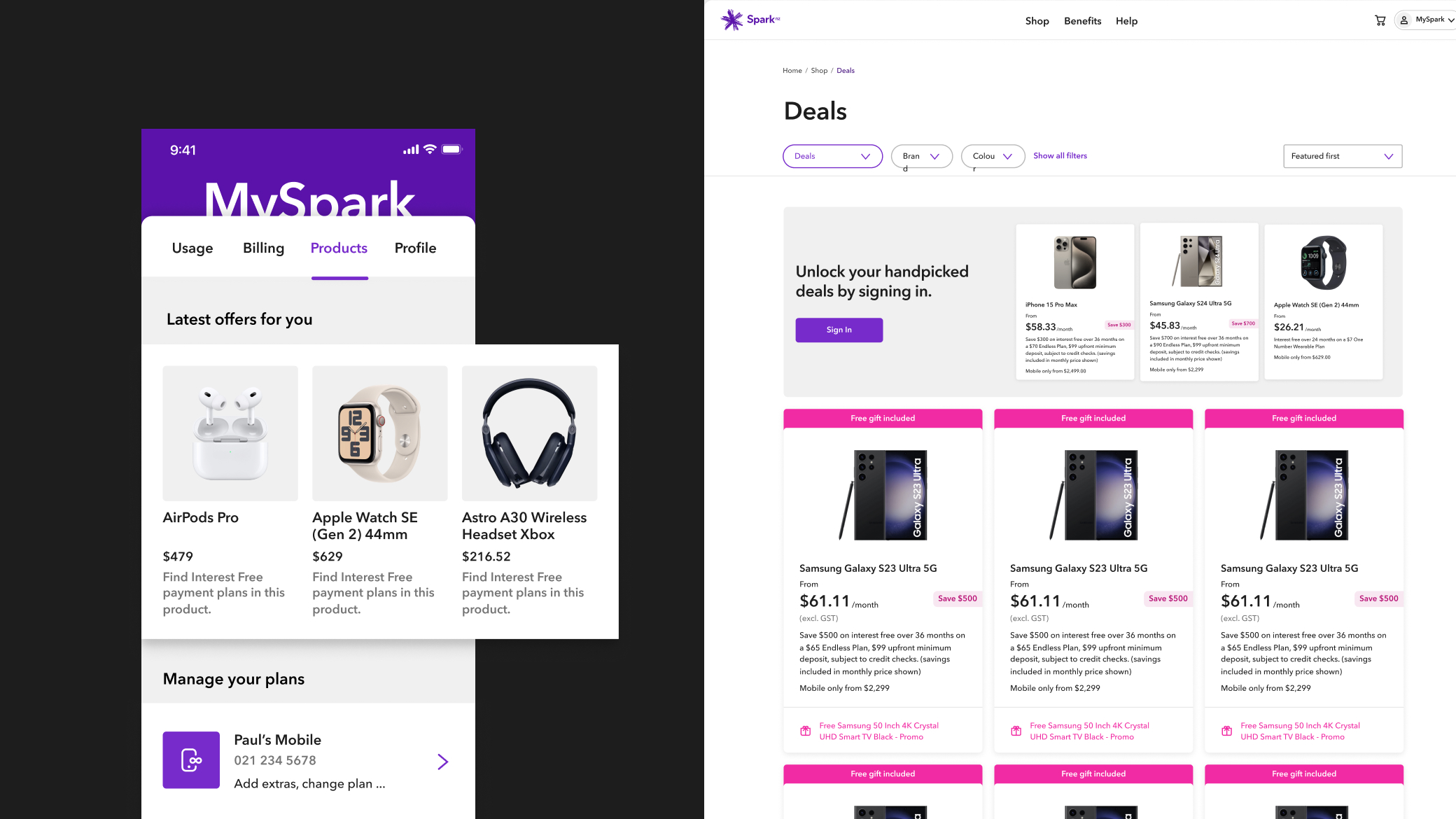
Our team was tasked with a significant challenge: to explore the potential of personalization in customer journeys. The objective was to determine whether personalized product recommendations could increase product purchases within households. By leveraging AI-powered technology and household data, we aimed to deliver the most relevant products to our customers, independent of our campaign priorities.
My accomplishments in this project:
1. 🤝 Guiding the Team towards a solution with a Design Sprint
At the outset, the team faced uncertainty regarding the project's roadmap. I played a pivotal role in guiding the team by co-creating strategies and engaging them in research and vision development. Planned and carried out a week Design Sprint to take the team through design thinking frameworks, I facilitated decision-making processes that allowed us to collaboratively develop realistic solutions, maximizing the skills of each team member.
2. 📈 Achieving Higher Conversion Rates
Through multiple iterations, I led research and analysis efforts to identify significant pain points in the customer journey. By collaborating closely with the technical team, we implemented improvements that resulted in higher conversion rates. This iterative approach ensured that we continually refined the user experience to better meet customer needs.
3. ⏰ Designing Journeys efficiently for faster time to market.
I designed customer experience journeys utilizing available resources to accelerate our time to market, closely collaborating with the technical team to understand feasibility. By integrating insights from our previous research, I ensured that these journeys were not only efficient but also maximized the value of the user experience. This approach allowed us to deliver personalized offerings quickly while remaining aligned with customer expectations and preferences.
4. 📊 Deep Analysis of Experiment Results
I conducted a thorough analysis of experiment results using Adobe Analytics metrics to gain insights into customer behaviors and identify potential pain points. By transforming these findings into actionable design iteration opportunities, I ensured that our solutions were continuously improved based on real user data, enhancing the overall effectiveness of our personalization strategy.
Our hypothesis posits that personalized offers on our website will increase household product purchases.
-
By using AI and household data to recommend relevant products, we predict a significant boost in sales, enhancing the overall customer experience.
Discovery work
The team was initially provided with a goal to prove the hypothesis but lacked a concrete output. To address this, I led the team through a Design Sprint to reach a consensus on our approach.
Outcomes of the Design Sprint
- Developed a list of 3-5 experiments for the quarter, considering the top three audiences, top products/offers to be sold, channels, and journeys.
- Created basic wireframes for each experiment.
- Established a roadmap of experiments with a list of Product Backlog Items (PBIs) assigned.


User Research
- Understanding Personalization: Explored how users felt about personalization, noting that other brands like Netflix already implement it, making users aware of its benefits.
- Created household profiles to tailor recommendations.
- Popular Offers: Identified the most popular offers and determined what could be relevant for different placements.
- Developed a model to target users based on affinities, creating multiple target user groups and offering different product bundles.
- Channel Placement: Analyzed where to place offers across channels.
- Conducted visual mapping and metric analysis.
- Determined that while the app had high traffic, the web shop was more suitable for purchases.
- Business Insights: Conducted stakeholder interviews to gather insights from different business areas, guiding our direction.
The discovery phase spanned an entire quarter, during which we addressed numerous questions and ran short experiments to test capabilities and validate ideas.
Delivery Phase
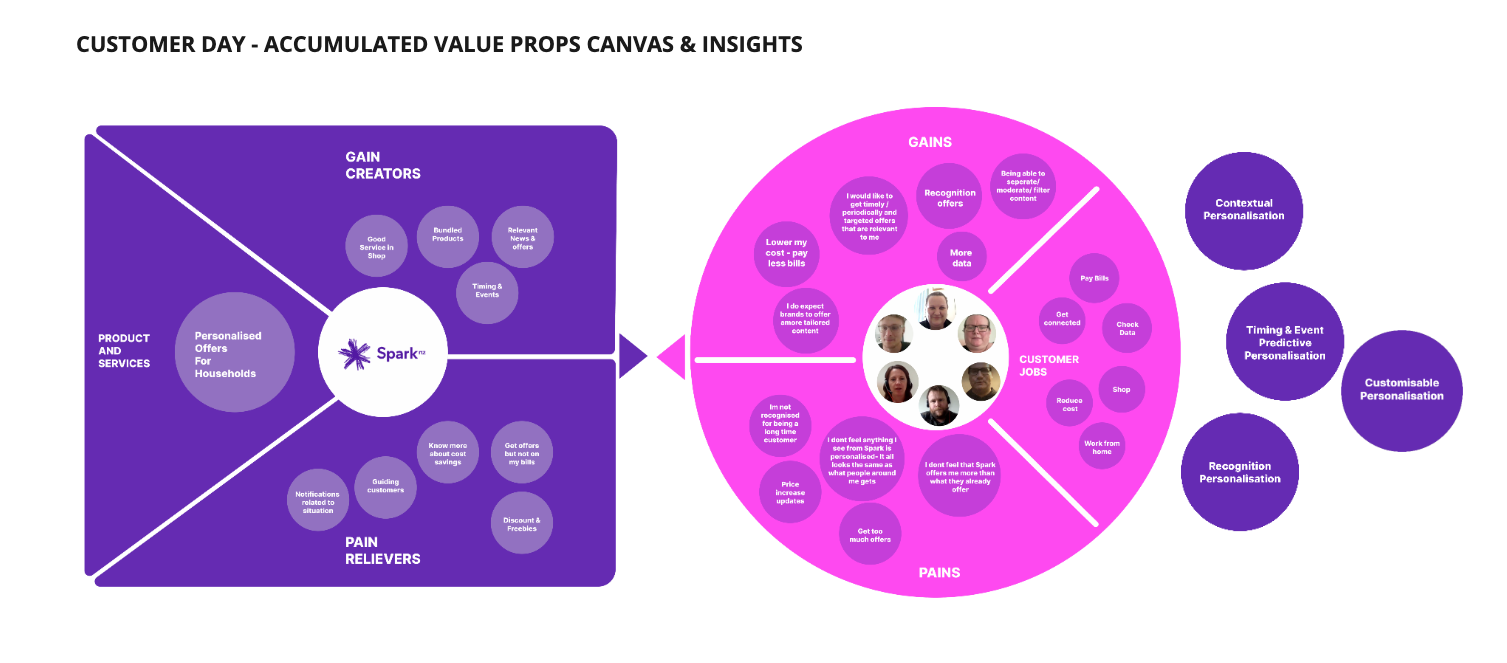
To introduce personalized product recommendations, we utilized the Deals landing page, making minor design changes to incorporate three product recommendations. Customers could access this personalized landing page from three different locations: the Homepage (web), Shop (web), and My Spark RAC (web).
- Authentication Requirement: Users needed to authenticate to view recommendations, making this stage of the user flow crucial for the experiment's success.
- Integration with Existing Design: Recommendations were layered over the existing shopping experience without creating a new design. This approach allowed us to compare metrics and determine the component's success.
Duration: 1 month live
Audience: 6,000 targeted customers
Results of experiment
After one month, I dedicated a sprint to analyze the data, identifying pain points and user behaviors. Key findings included:
- Page Visits: Only 2.47% of targeted customers landed on our experiment page, a 12.92% decrease compared to the existing deals page. This indicated a need for more triggers to direct users to the experiment page.
- Authentication Rates: While 78% of our traffic was authenticated, 22% were not, preventing them from seeing recommendations.
- Click-Through Rate: The click-through rate on product cards in the experiment was lower than on the non-experiment page.
- Product Interaction: Users primarily clicked on non-recommended products, suggesting issues with the recommendation's appeal.
- Conversion Rates: Despite these challenges, conversion rates were 3% higher than the existing experience.
Creation of a Second Iteration
To address these issues, I avoided making UI changes based on assumptions. Instead, I used research and performance analysis to identify pain points affecting user conversion.

Authentication Challenges:
- Problem: Non-logged in users need to log in to view recommendations.
How can we improve successful logins?
- Design Solution: Implemented the Curiosity Gap psychology principle by creating a CTA banner designed to intrigue users and encourage them to log in.
In marketing, this gap is used to create an irresistible urge for a person to find out more about a product or service.
Recommendation Engagement:
- Problem: Personalised product selection did not get as many click-throughs as the non-personalised selection.
- Design Solution:
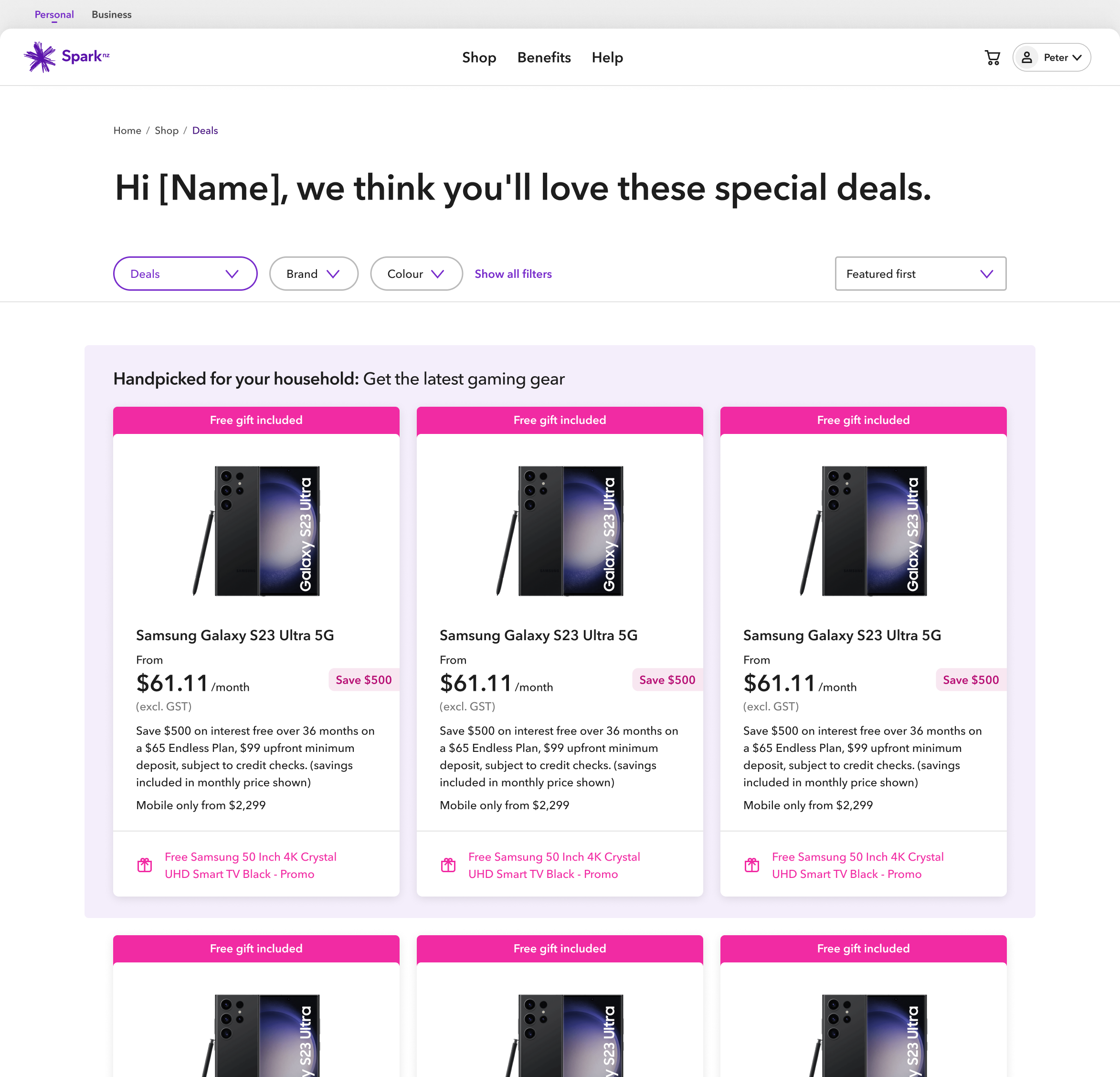
Introduced name-based personalization to add a personal touch, enhancing engagement and conversion rates.
Increased contrast in the recommendation section and added contextual text to bolster credibility and clarify personalization.
By addressing these pain points, we aimed to improve user engagement and conversion rates in the second iteration, ensuring a more effective personalized experience.