
🚀 Overview
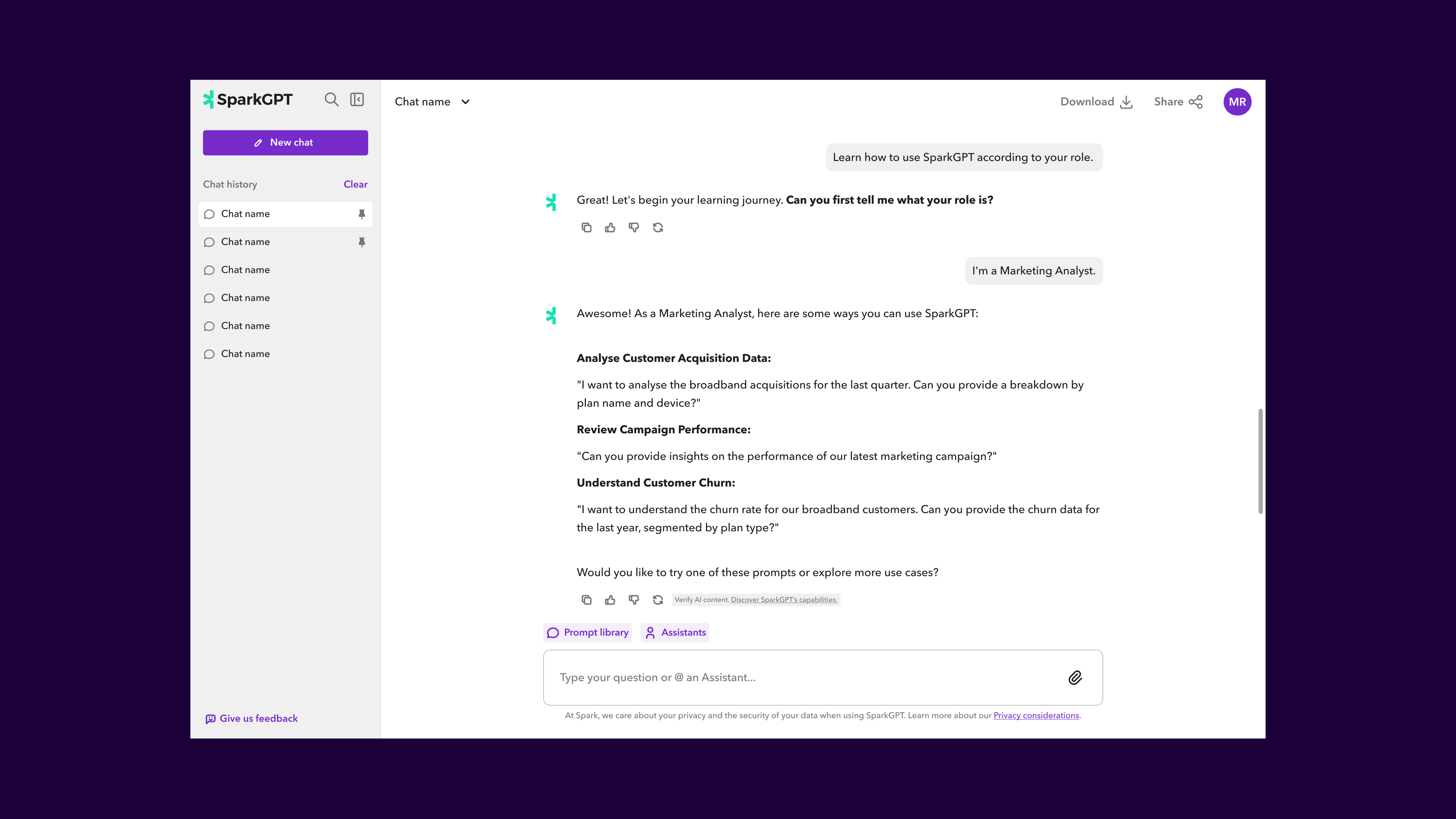
SparkGPT is a generative AI tool built for Spark employees to access internal knowledge and automate tasks securely. But as adoption grew, so did a key issue: users weren’t always sure what SparkGPT could (or couldn’t) do.
⚠️ The Problem
A deep dive into user feedback revealed:
- ❓ Users asked SparkGPT questions it couldn’t answer (like pulling live data)
- 😕 Many didn’t understand where its info came from
- 😤 Frustration led to drop-offs and mistrust
🎨 My Role
- Led the feedback analysis across multiple touchpoints
- Synthesized recurring patterns in misunderstandings
- Designed and delivered the Suggested Prompting experience
- Collaborated with PMs and engineers to shape a scalable roadmap
🧭 The Design Process — Storytelling Through Research
🧪 First Step: Listening to Feedback
Every few months, we collect feedback from:
- 👍👎 Thumb reactions
- 📝 In-app feedback forms
- 💬 User interviews
In Q1 2025, I analyzed 100+ pieces of feedback.
Over 60% of negative feedback came from misunderstandings about how the tool worked:
- “Why can’t it fetch this dashboard data?”
- “The answers seem made up.”
- “What is this trained on?”
🔍 What We Discovered
The main issue wasn’t the feature set — it was user understanding. We needed to:
- Set clear expectations
- Teach prompting skills
- Build confidence with new users
💡 What Can We Do to Build Confidence?
✅ Make It Clear What SparkGPT Can and Can’t Do -Users needed a better mental model of the tool's capabilities.
✅ Help People Prompt Better - Many didn’t know how to ask the tool questions effectively.
✅ Build a System That Can Grow - We needed to test our ideas fast, but plan for smart, scalable prompting down the line.
💻 Solutions We Rolled Out
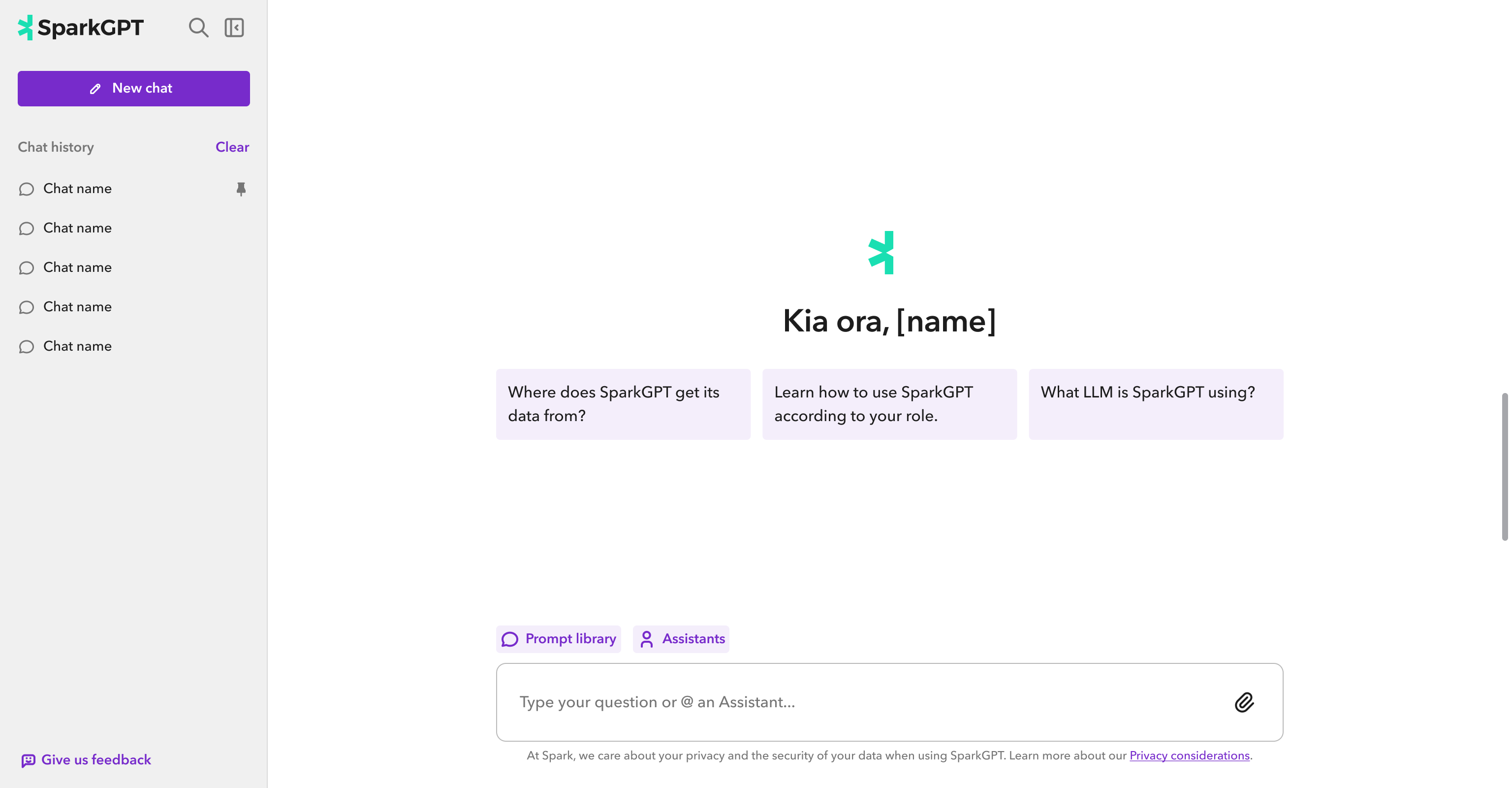
🎯 Static Suggested Prompts (Phase 1)
We started small (we work agile!)— when a user lands on a new chat, they see helpful suggestions like:
- “What can I use SparkGPT for in my work?”
- “Is my data private when I use SparkGPT?”
- “Summarise this meeting: [paste notes]”
- “Draft an email about [topic] in a [tone] tone.”
Why This Approach Works
- 🚀 Better Engagement – Users see relevant prompts upfront, making it easier to start.
- 🔍 More Discoverability – AI introduces use cases that users might not think of on their own.
- 📈 Scalable Learning – The system adapts dynamically as users gain experience.
- 🛠 Encourages Experimentation – Users feel guided but also free to explore.
🔮 Dynamic Prompting (In Progress)
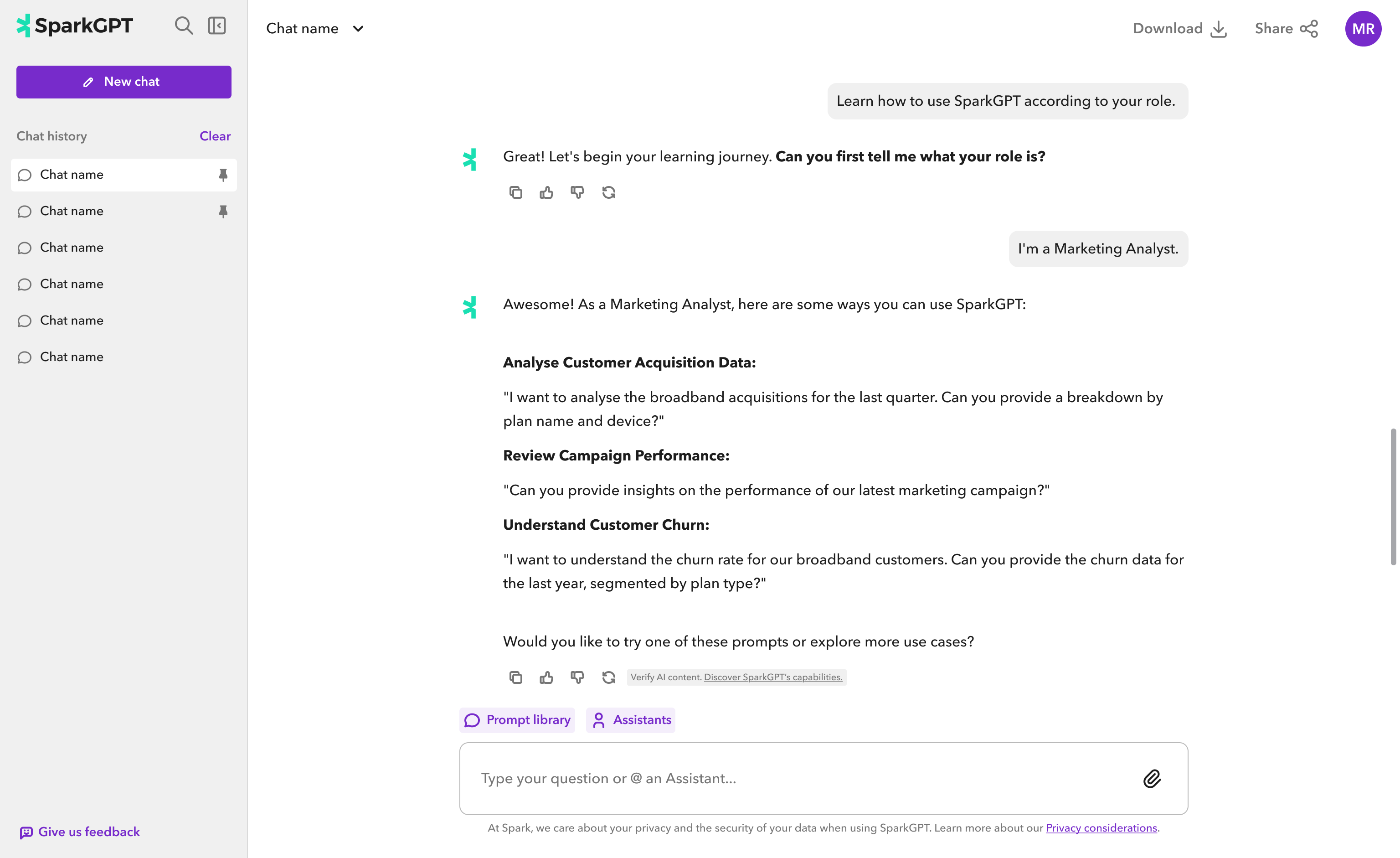
We’ve laid the groundwork to:
- Adapt prompts based on user role (e.g., Product, Contract, Analytics)
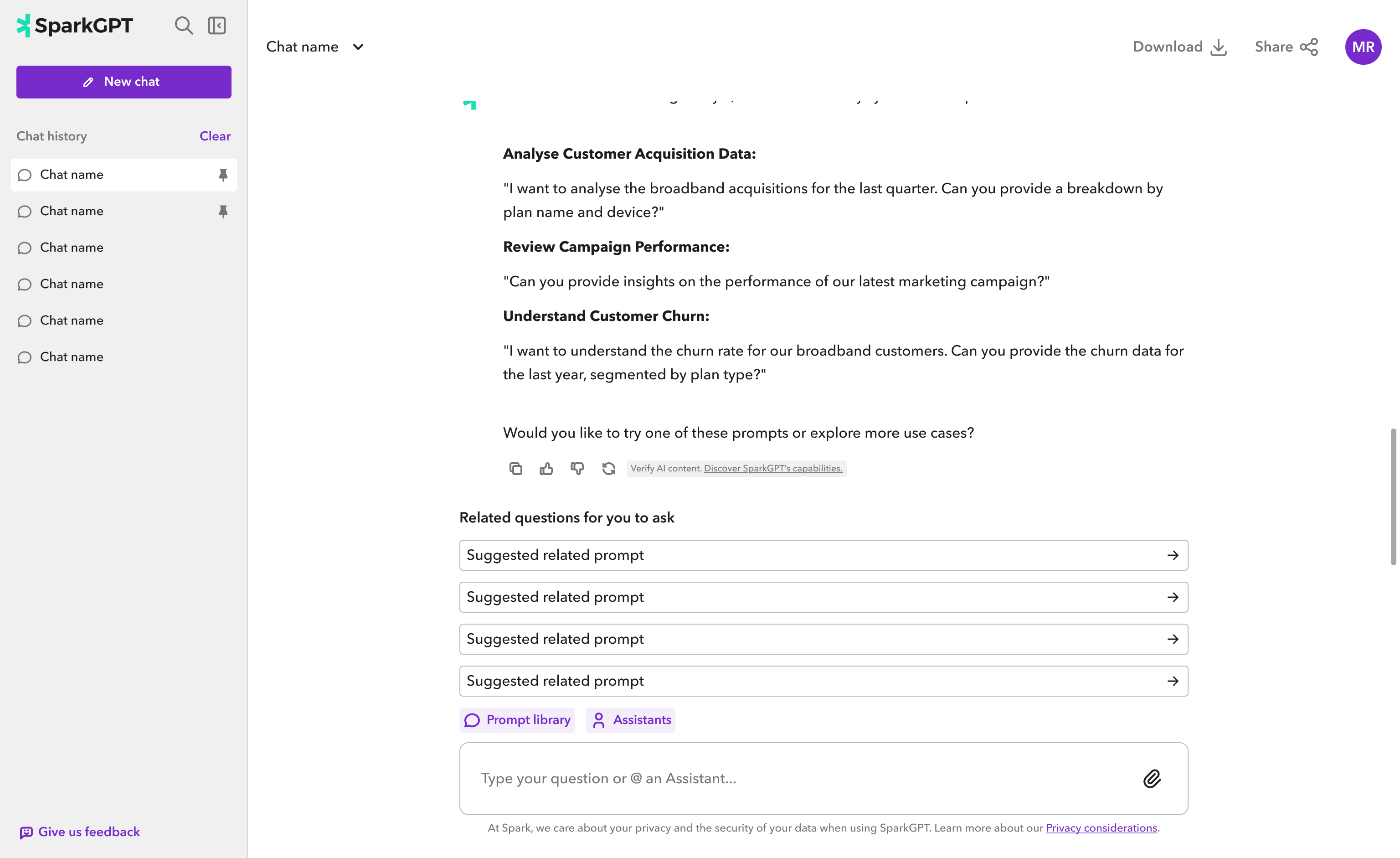
- Suggest questions based on prompt history
- Recommend ways to improve poorly structured queries
📌 Goal: Build a machine-learning-driven backend system that dynamically suggests prompts based on user history, past interactions, and usage patterns.
📈 Outcomes
- 🧭 Users began exploring SparkGPT more confidently
- 🙋♀️ Drop in questions like “What should I do with this tool?”
- ✍️ Prompt quality improved — more structured and role-relevant
My Achievements in This Project
- Translated qualitative feedback into actionable UX solutions to build trust and clarity in AI workflows
- Wrote, tested, and deployed the first round of static prompt suggestions with measurable success
- Helped establish the content and logic model for dynamic prompting, to scale AI usability
- Created alignment across teams for solving a behavioral UX problem, not just a feature request