
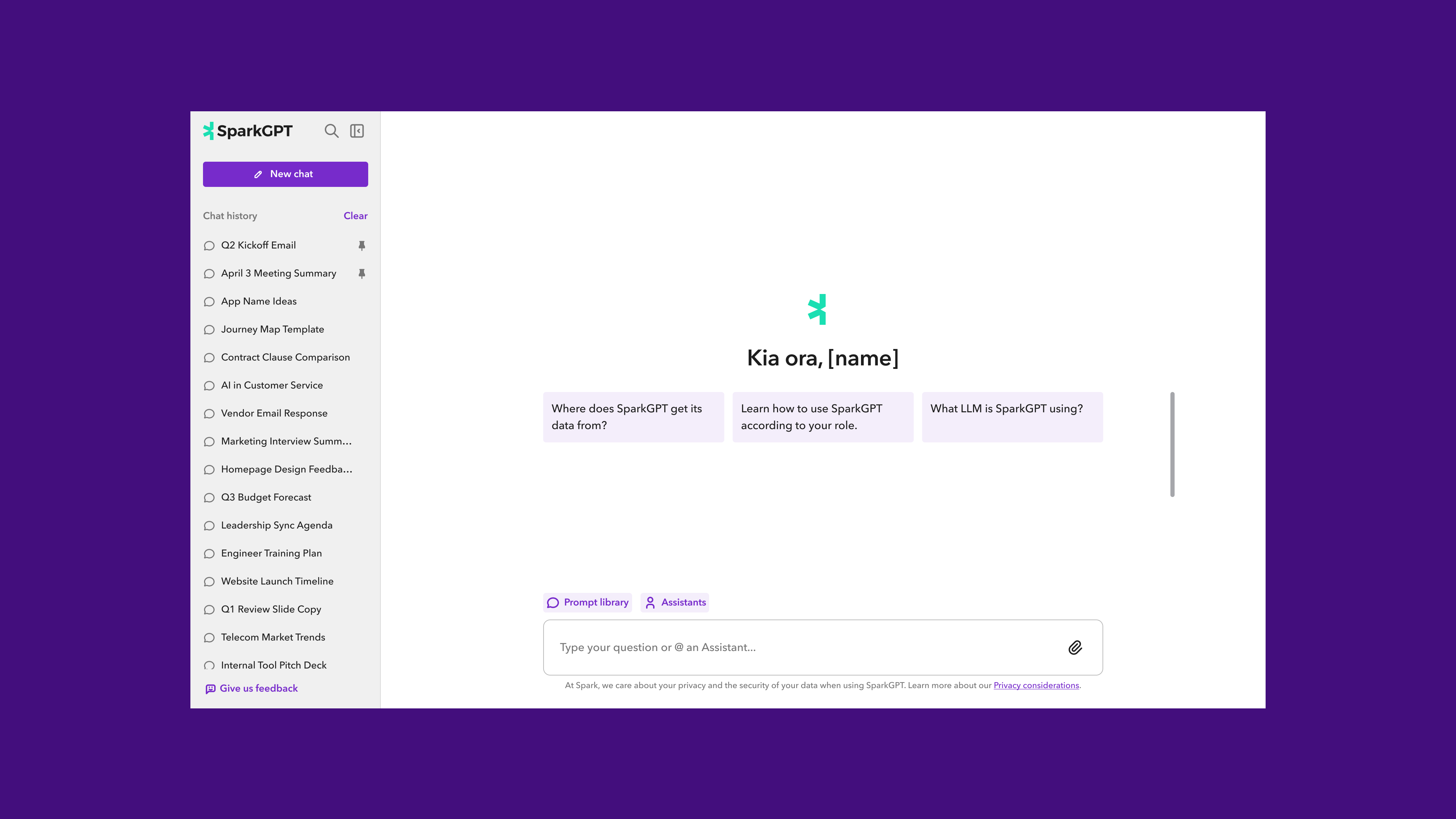
What is SparkGPT?
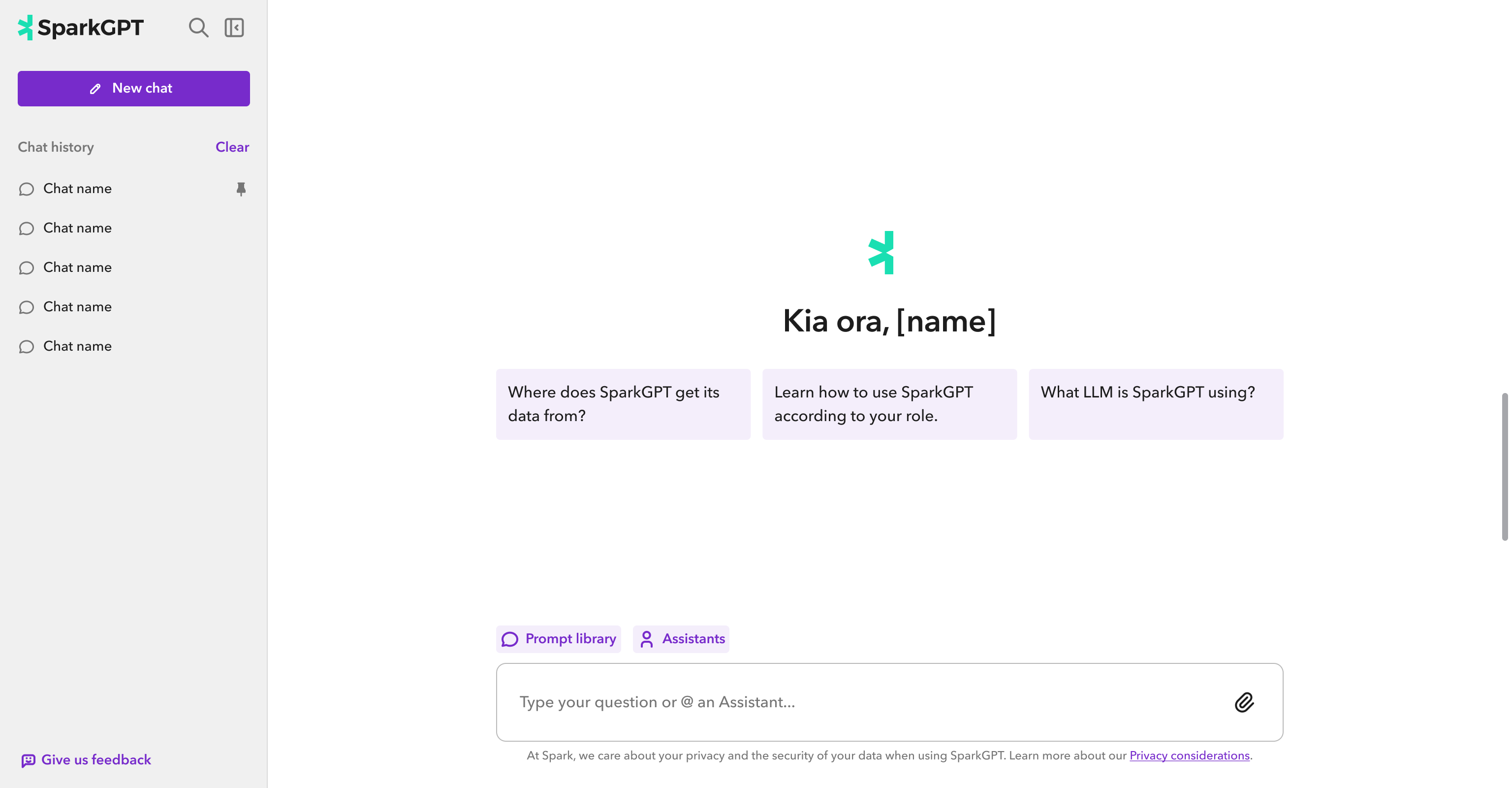
SparkGPT is a secure, internal generative AI tool built for Spark employees. It helps teams quickly access confidential company data and automate daily workflows — tailored to Spark’s business needs and privacy standards
⚠️ The problem
Adoption of SparkGPT was very slow and wasn't meeting up with business expectations.
Employees struggled with:
- Slow, fragmented access to internal knowledge
- Unclear understanding of what AI could do
- Distrust in public AI tools for sensitive data
We saw an opportunity to build something useful, secure — and actually used.
The Design process
🧪 First step to success: RESEARCH
Even though GenAI is booming worldwide, I knew we couldn’t assume Spark employees would trust or adopt our product easily. So I began by asking:
So I asked myself:
- How do people in Spark currently feel about GenAI technology?
- How are they engaging with common tools such as ChatGPT, Copilot and others?
- Are there different needs depending on the craft? Do we need different features depending on the area?
I conducted:
- Desk research on GenAI behavior in the workplace
- Workshops with cross-functional teams (marketing, product, design, finance)
- Collaborative ideation sessions with the squad
What did we discover?
We found that many users:
- ❌ Had low trust in AI due to privacy concerns
- 🤷♂️ Didn’t understand what SparkGPT could do - What's the value proposition?
- 🔁 Had poor early experiences with AI tools
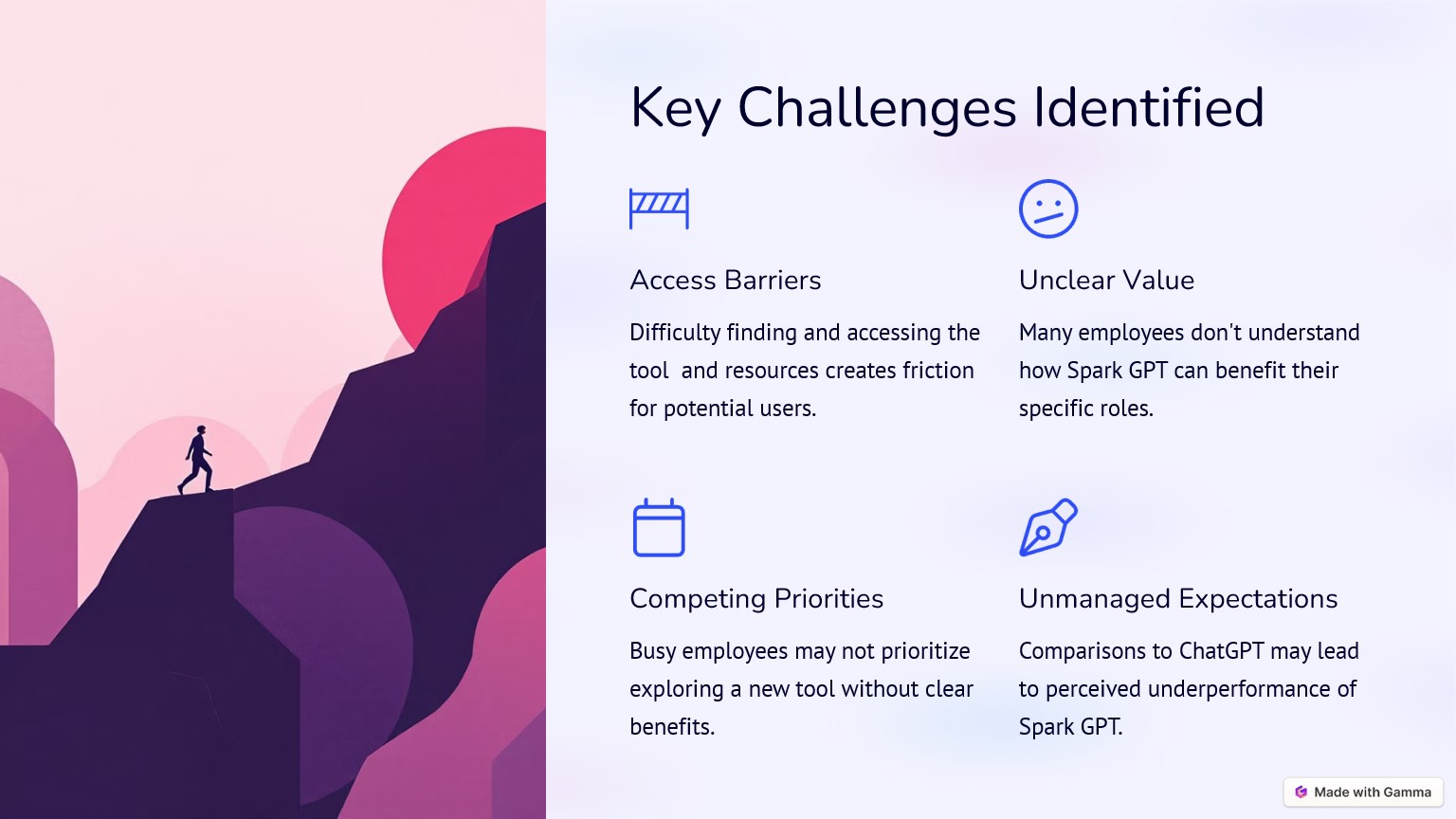
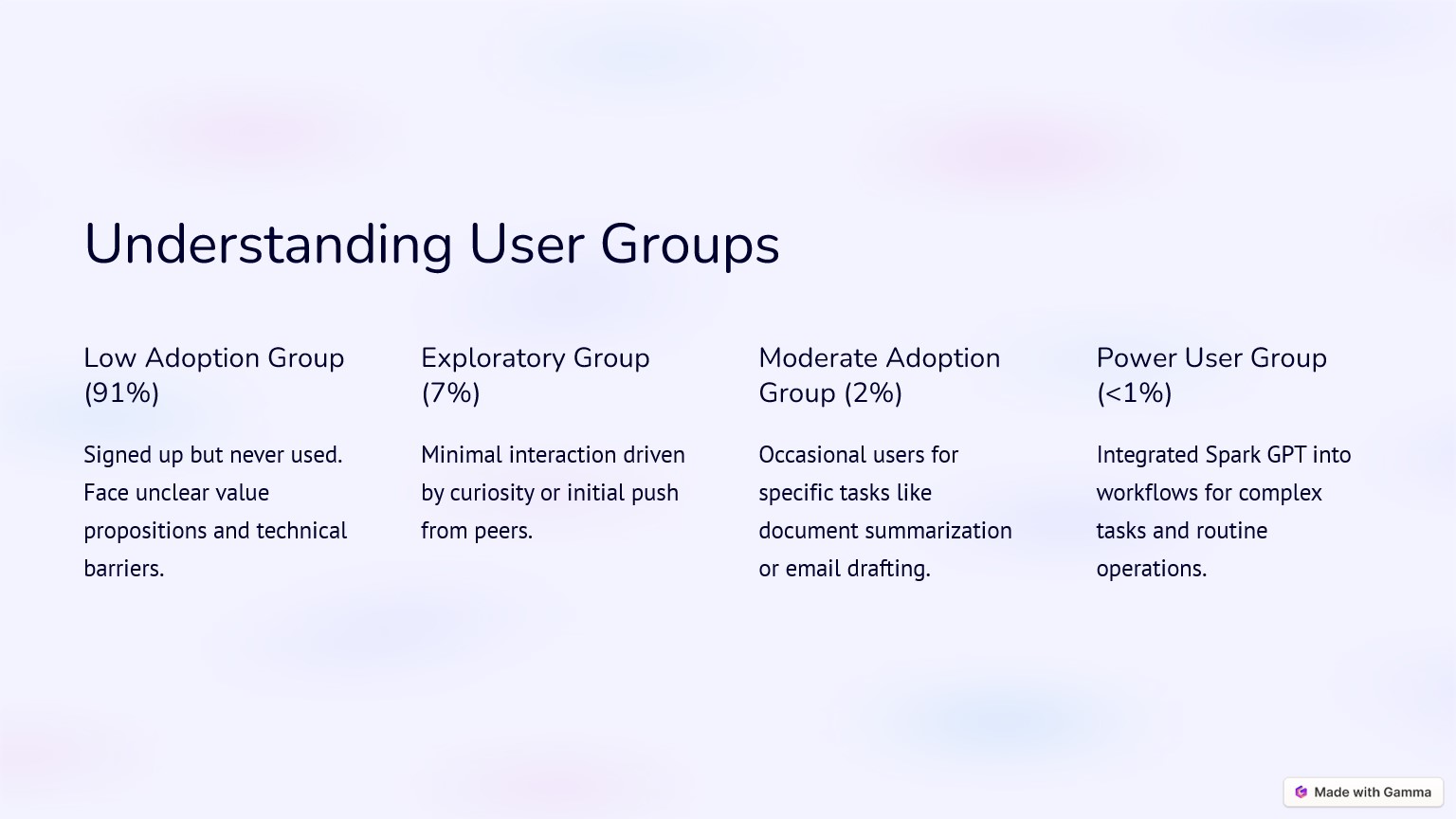
These pain points became our guiding insights.
Users didn’t just need features — they needed confidence.
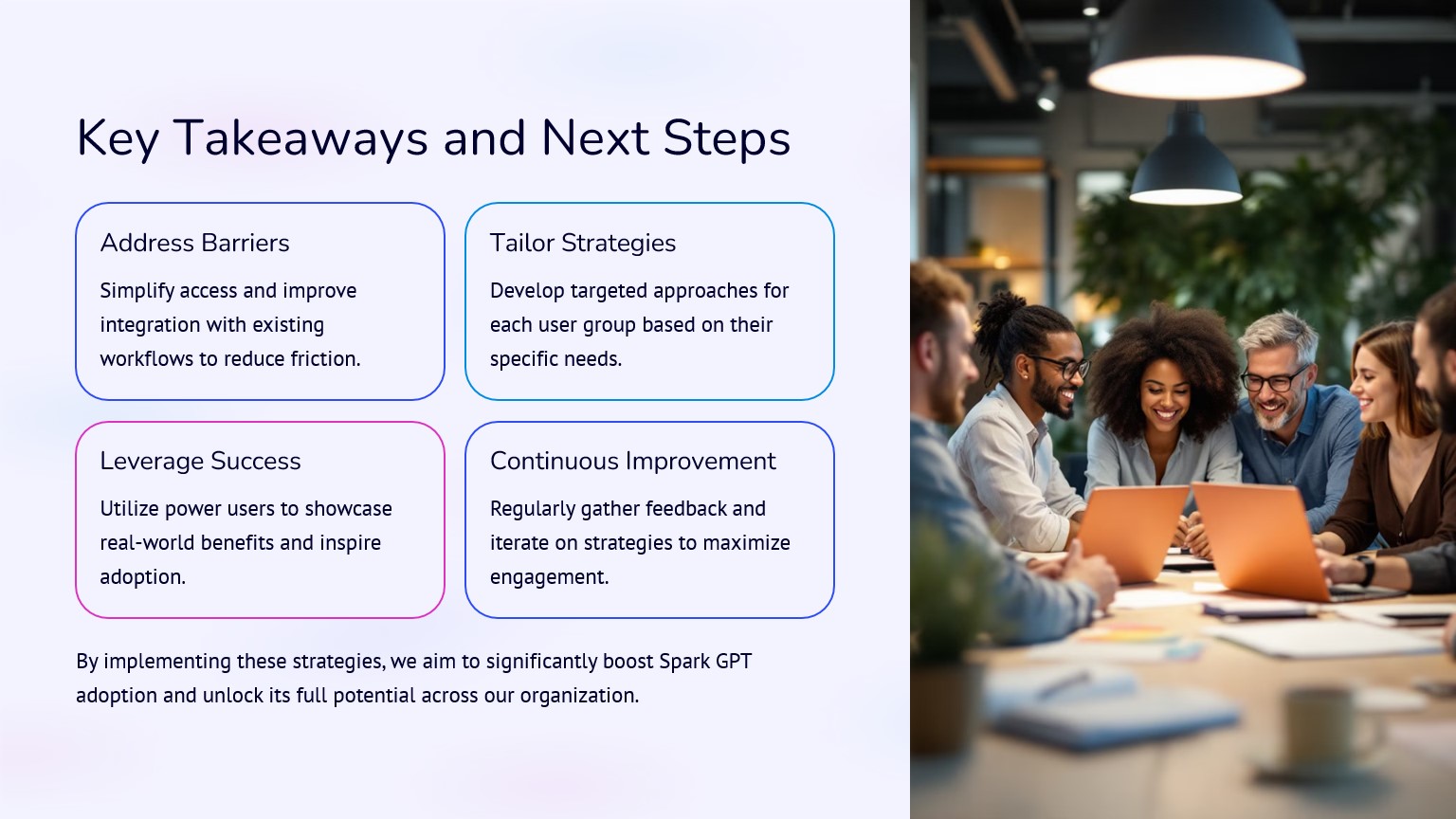
What can we do to increase confidence?
- Training and Practical Guidance: Strong desire for training, practical examples, and guidance on how to effectively use AI tools in their work. They want to see real-world applications, learn prompt engineering techniques, and understand how AI can be integrated into their specific roles.
- Transparency and Understanding of AI Processes: More transparency about how AI tools work, including the data they're trained on and the processes they use to generate outputs. This understanding would increase trust and enable more effective use of the tools.
- Proof of Effectiveness and Reliability: Evidence of AI tools' effectiveness and reliability in their work context. They want to see tangible benefits, such as time savings and improved productivity, to increase their confidence in adopting these tools
🛠️ Team Practices — From Chaos to Clarity
Our delivery process was unclear and chaotic. To fix it:
- I ran internal workshops to map pain points
- Rolled out Kanban for better workflow visibility
- Introduced RICE to make prioritization clearer and more user-centric
✅ As a result, we halved delivery cycle time and aligned the roadmap with real user needs

🚧 Solutions We Delivered
Based on our findings and priorities, I contributed to the design and delivery of several key features:
- 📁 Improved File Upload UX: Added drag-and-drop, clearer error messages, upload progress indicator, and support for more file types and sizes.
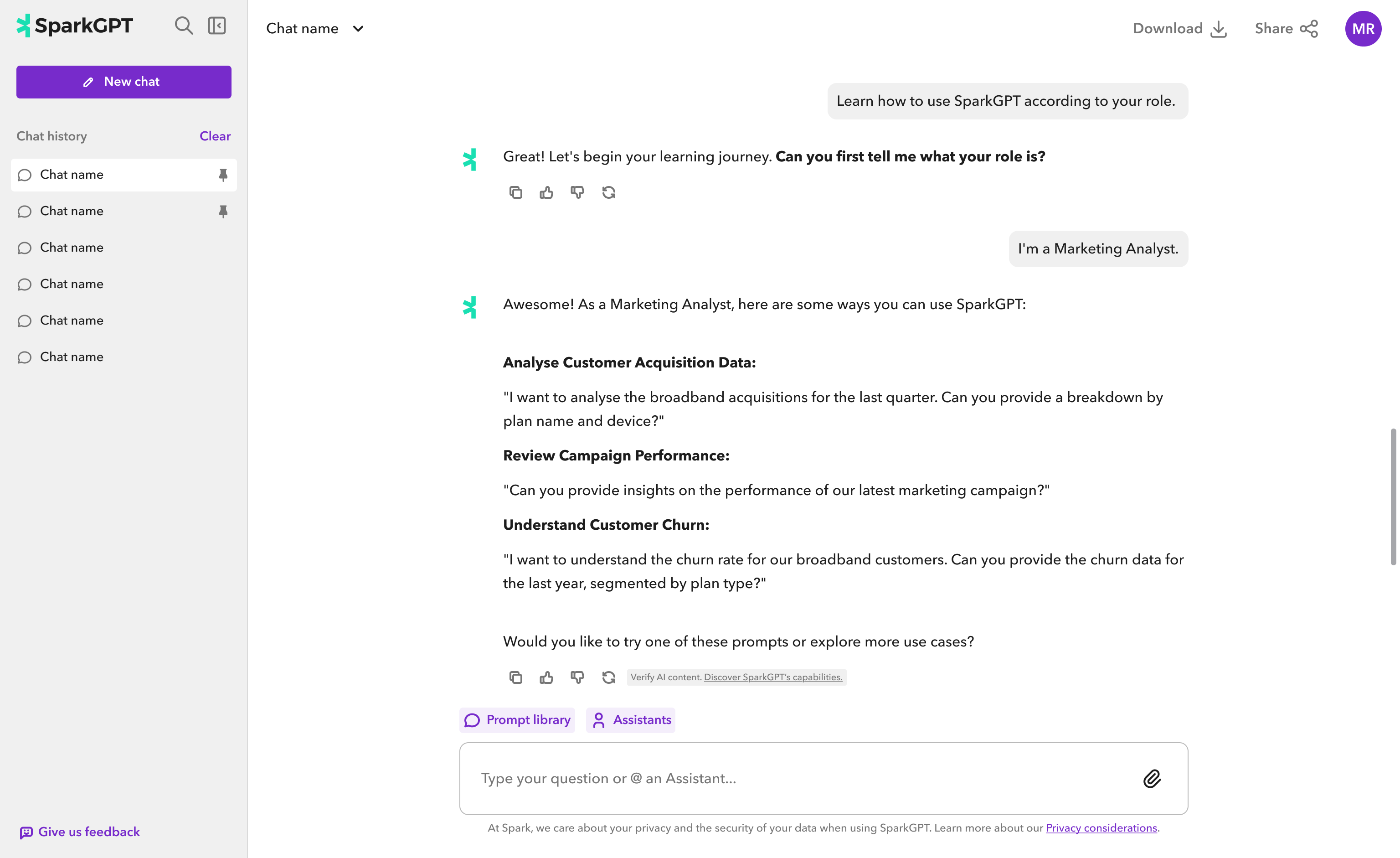
- 🧭 Suggested Prompting (Static): Helped users understand how to use SparkGPT effectively, especially those new to AI. (See separate case study)
- 🧠 Role-based Assistants Framework: Created a UI framework that supports context-specific assistants (e.g., ContractGPT, ProductGPT), enabling a more relevant user experience.
- 📒 New Onboarding Experience: Developed the groundwork for onboarding that guides users by role and experience level.
These features were prioritized and tracked in our Kanban board with RICE scoring to ensure we focused on what mattered most to users.

My achievements in this project:
📈 Increased user adoption and usage by 20%
through better functionality and seamless experiences, using recognizable patterns from other GenAI tools, but with the addition with specific features adapted to our business.
🚀 We halved delivery time and aligned the roadmap with real user needs.
📱Designed a scalable UI
that is not only future-proof and easy to maintain but also adaptable for growth. This design aims to seamlessly integrate various assistants tailored to different user groups.
💬 Identified key behavioral barriers to GenAI adoption
through in-depth research, which led to targeted solutions including onboarding content and prompt guidance.
🛠️ Mapped the needs of diverse business areas and created functionality
tailored to different user crafts — while maintaining a consistent design system.